
It usually starts small. A word comes out with a faint whistle. Your tongue seems to be doing extra work to keep the denture in place. You catch yourself speaking a little more slowly at the family dinner table, or you skip the phone call and send a text instead.
If that sounds familiar, you are in good company. Many people who wear dentures notice changes in how they speak at some point, and those changes tend to creep in rather than arrive overnight. Here is a plain look at why it happens, what is worth paying attention to, and what a dental team can generally do about it.
Why speech and dentures are so closely linked
Clear speech is a surprisingly physical job. Sounds like "s", "f", "th" and "t" depend on your tongue touching or nearly touching the teeth and the roof of your mouth in very specific places. Your lips, cheeks and jaw all have a part too.
A denture sits right in the middle of that choreography. When it fits well and sits steadily, your mouth learns where everything is and adjusts. When it moves, even a little, your tongue and lips have to guess.
That guessing is what people often describe as "mumbling", "slurring" or "clicking". Some say their words sound wet or muffled. Others notice a whistle on certain letters. None of these descriptions are a diagnosis, but they are a useful clue that something about the fit may be worth a conversation with your dentist.
What changes over time
Dentures are made to match your mouth at one moment. Your mouth, however, keeps changing.
The gum ridges that support a denture can slowly change shape after teeth are lost. This happens gradually, over years, and it is a normal part of how the body works. A denture that fit snugly when it was new can end up sitting differently on the ridge, with small gaps that were not there before.
Wear is another factor. The teeth on a denture can flatten and the edges can change, which alters how your tongue meets them. A denture that is several years old (or more) has been through a great many meals, cleanings and mornings in a glass.
Finally, weight changes, health changes and some medications that dry the mouth can all affect how a denture feels and behaves. Dry mouth in particular can make a denture feel less settled, and it can make speaking tiring.

The quiet effect on confidence
The speech itself is only half of it. The other half is what you do because of it.
People with a denture that moves often start to edit themselves. They choose shorter words. They avoid certain sounds. They sit at the quiet end of the table at a gathering, or they pass on the community centre coffee morning because chatting feels like effort.
It is worth saying out loud: this is common, it is not a character flaw, and it is not something you simply have to put up with. Speaking comfortably in front of people you care about matters, and a dental visit is a perfectly reasonable response to losing that comfort.
Small things worth noticing before your visit
You do not need to arrive with a medical vocabulary. A few observations in your own words are enough, and they help your dentist understand what is going on.
- When it happens. Is it mostly when you start talking after a quiet spell, late in the day, or during long conversations?
- Which sounds. Some people can point to specific letters or words that feel harder than they used to.
- What the denture does. Does it shift, click, lift at the back, or seem to float when you speak?
- Sore spots or changes in eating. Speech trouble and chewing trouble often travel together.
- How old it is. A rough guess is fine. If you remember roughly when it was made, that helps.
Jot these down on your phone or on the back of an envelope. It is easy to forget the details once you are in the chair.
What a dental team can generally look at
Every mouth is different, so nobody can tell you in advance what your own situation needs. In general terms, though, a visit about loose dentures and speech tends to involve a few things.
First comes a conversation. A good dental team will ask what you have noticed and listen to how you speak, because the way a denture affects your voice is part of the picture.
Then comes an examination of the denture and of your mouth: how the denture sits, how it moves, how the gums and ridges look, and how your bite comes together. Sometimes a small adjustment is all that is discussed. In other cases, a reline (refreshing the surface that sits against the gums) or a replacement may come up as an option. Which of those suits you is a decision to make with the dentist after they have seen your mouth.
It is also reasonable to ask about the range of denture types. Complete dentures replace all the teeth in an arch, while partial dentures fill in gaps and rely on remaining teeth for support. Different designs behave differently when you talk, and your dentist can explain what applies to you.
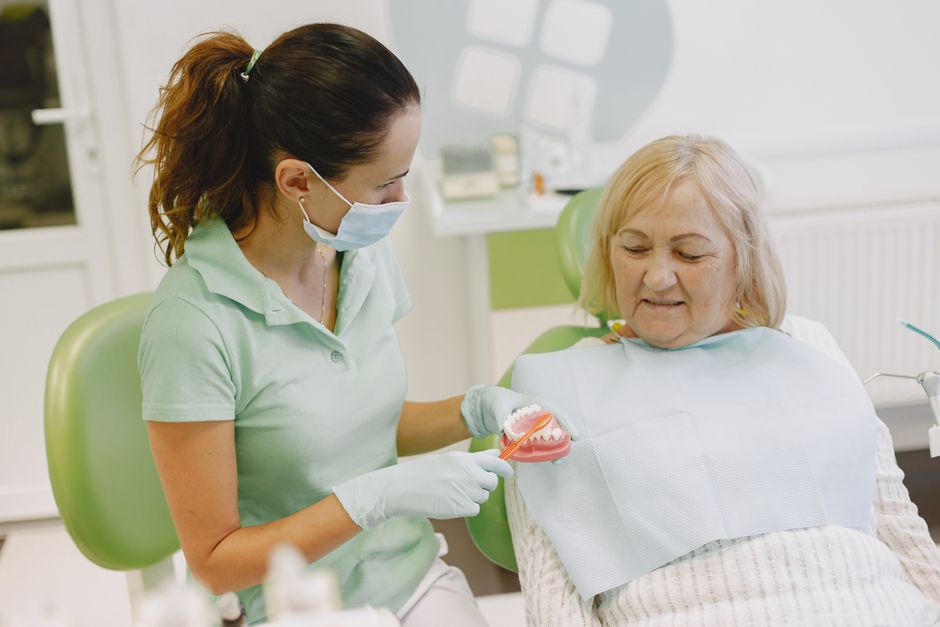
Adjusting to a new or refreshed denture
If a denture is adjusted, relined or replaced, expect a settling-in period. Your tongue and lips need time to learn the new shapes. Speech can feel slightly odd for a while, and that does not mean something has gone wrong.
A few habits are commonly suggested to help the mouth adapt. Reading aloud at home for a few minutes a day gives your tongue some low-pressure practice. Repeating tricky words slowly, or singing along to a favourite song in the kitchen, can do the same job with more fun. Sipping water while you talk helps if your mouth runs dry.
Follow-up visits matter during this stretch. Small tweaks after the first week or two are a normal part of the process, so if something rubs or feels off, mention it rather than waiting it out.
Day-to-day care that helps a denture behave
Whatever the state of your denture, a few everyday habits tend to keep things comfortable:
- Clean it daily with a soft brush and a cleaner made for dentures, rather than regular toothpaste, which can be abrasive.
- Take it out at night if your dentist has said that suits you, and keep it in water or a recommended solution so it does not dry out or warp.
- Clean your gums, tongue and any remaining natural teeth every day. A clean mouth is a more comfortable mouth.
- Handle it over a folded towel or a basin of water, since dentures can crack if they are dropped.
- Keep your regular check-ups. Your dentist can notice changes in fit before you do.
When to book sooner
Speech changes on their own are worth a visit, but some signs call for more prompt attention. See a dentist soon if you notice a sore spot that does not settle, a crack or chip in the denture, swelling, or a patch in your mouth that looks different from the rest. If a denture suddenly feels very different, that deserves a call rather than a wait-and-see approach.
And if you ever have trouble breathing or swallowing, that is an urgent medical matter, not a dental appointment. Seek emergency care.
Getting started in Coquitlam
If your denture no longer feels like it belongs in your mouth, you do not have to wait for a crisis. Whether you live around Austin Heights, Burquitlam, Maillardville or near Coquitlam Centre, a short visit can help you understand where things stand and what the options might be.
Dentaserv Dental Clinic has been looking after patients of all ages in Austin Heights and Coquitlam for more than 30 years, including people who wear complete or partial dentures. Bring your list of what you have noticed, and bring the denture itself. If cost is on your mind, ask the front desk what to check with your benefits plan first.
Speaking clearly and without worry is a reasonable thing to want. It is worth asking about.