
You greet the first customer of the day with a smile. You greet the fortieth with the same one. Somewhere around the middle of a long shift, you notice that you have started smiling with your lips closed, or tilting your head so the gap between your front teeth is a little less visible.
If that sounds familiar, you are in good company. People who work on a shop floor, behind a counter or at a till spend more of their day being looked at than almost anyone. A smile is part of the job. Feeling self-conscious about it is common, and it is a perfectly good reason to ask a dentist about orthodontics.
This guide is for retail and service workers in Coquitlam who are curious about straightening their teeth as an adult. It covers what the conversation with a dentist usually looks like, how treatment tends to fit around a working schedule, and what to ask before you decide anything.
Why a shop-floor smile feels different
An office worker might spend hours facing a screen. A retail worker faces people. Customers meet your face at close range, often in bright lighting, and often for only a few seconds at a time, which is exactly long enough to feel noticed.
Many people in customer-facing jobs describe the same small habits: covering the mouth when laughing, avoiding photos at staff events, speaking a little more quietly. None of these are a problem in themselves. But if you catch yourself doing them every day, it may be worth asking whether you want something to change.

What "straighter" can mean
Crooked teeth are not one thing. Some people have gaps between teeth. Others have crowding, where teeth overlap or twist. Some have a bite where the top and bottom teeth meet in a way that is uneven. Each of these has different options, and a dentist can only tell you which applies to you after an examination.
That is worth saying plainly: an article cannot tell you what your teeth need. What it can do is help you walk into a first appointment with better questions.
What a first conversation usually involves
An orthodontic consultation is mostly a conversation. A dentist will look at your teeth and gums, ask what bothers you, and ask what you would like to be different. Photos or X-rays may be part of the visit, depending on what the dentist needs to see.
Gum health comes first. Teeth generally move best when the gums and the bone around them are healthy, so if there is a cleaning or a cavity to deal with, that is often sorted out before anything else. It can feel like a detour. It is better thought of as groundwork.
You can also bring up the things that matter to your working life. How visible does treatment need to be? Can you talk clearly with it in place? How often would you need to come in, and when?
Options, in general terms
Orthodontic treatment for adults tends to fall into a few broad families. Which of them suits a given person is a decision for you and your dentist, not something to settle from a blog post.
- Fixed braces. Brackets bonded to the teeth and joined by a wire. They are the long-established approach, and some versions are made in tooth-coloured or smaller styles.
- Clear removable aligners. A series of custom trays worn most of the day and taken out to eat and to clean your teeth. They are less noticeable, but they only work if they are actually worn.
- Retainers after treatment. Teeth have a habit of drifting back, so a retainer is normally part of the plan once the main work is finished.
Some cases are simpler and some are more involved, and a dentist may recommend one approach, a mix, or a referral. Ask why they suggest what they suggest. A good answer is specific to your teeth.
Questions that suit a customer-facing job
Think about your actual week and ask accordingly:
- How will this look to a customer standing at the counter?
- Will I have trouble with certain sounds when I first start?
- What should I do on a shift if a wire or bracket feels sharp?
- How do I clean my teeth properly on a split shift or a short break?
- How many appointments will I need, and how long is each one?
Those are fair questions, and a dentist hears them often.
Fitting treatment around a retail schedule
Retail hours are rarely tidy. Early openings, late closes, weekends and holiday rushes are the norm, and time off is often arranged weeks ahead. That makes scheduling one of the most practical things to raise at the start.
Tell the clinic what your shifts look like. If you work at Coquitlam Centre, a nearby shop or a restaurant in Austin Heights, you may be able to book around your roster rather than the other way round. Some people find that predictable, recurring appointments are easier to plan than a one-off.
Looking after your teeth during a long shift
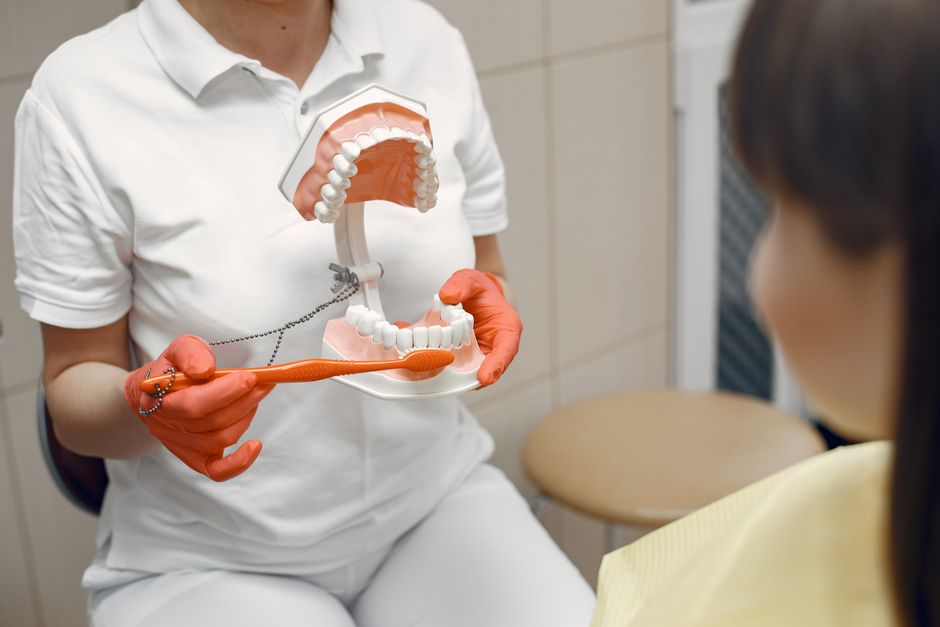
Whatever you choose, daily care matters more while teeth are being moved. Food can catch around braces, and aligners need to come out before you eat. Keep a small kit in your bag or locker: a travel toothbrush, floss or interdental brushes, and a case if you use aligners.
Drinks matter too. If you sip coffee, tea or a sweet drink through the day, mention it to your dentist. Frequent sipping can be hard on teeth and is easy to overlook when you are busy.
Keep your regular cleanings going as well. Regular check-ups are how a dentist notices a small problem before it becomes a bigger one.
Cost, coverage and the practical questions
Cost is a real part of the decision, and it is also one thing a blog cannot answer for you. The clinic can talk through what a plan would involve once your teeth have been examined.
If you have benefits through an employer, check your plan documents or ask your provider what orthodontic care is included, since plans differ a great deal. Many retail and service employers offer limited benefits, and some workers have none. If you are unsure what applies to you, ask the clinic's front desk when you book. They can often explain how they work with common plans such as Pacific Blue Cross, and what you would need to find out from your insurer.
Not everyone needs orthodontics
Straightening is a choice, and sometimes the answer is that you do not need it. A dentist may tell you your bite is healthy and your teeth are fine as they are. Others find that a smaller change, such as a polish and a cleaning, makes them more comfortable.
It is also fine to decide that you like your smile. The goal of a consultation is clarity, not a sales conversation.
Signs it is time to book a visit
You do not need a dental emergency to ask about your teeth. A few things are good reasons to book sooner rather than later:
- You avoid smiling at work or in photos, and it bothers you.
- Your teeth feel crowded and flossing is difficult.
- Your jaw clicks or aches, or you notice your teeth wearing unevenly.
- You have not seen a dentist for a while and are not sure where things stand.
None of these means something is wrong. They simply mean a dentist is the right person to look.
A small step first
You do not have to commit to anything at the first appointment. You can ask questions, hear the options and go home to think. Plenty of people take weeks or months before they decide, and that is normal.
Your smile does a lot of work between the first customer and the last. It deserves a little attention too.